24 hour emergency call-out07413 385767
Answered 7 days a week, day or night
Case study · Boiler servicing · Full strip-down
A Vokera reading over 999 ppm of carbon monoxide: a full strip-down service brought it down to 112 ppm
The analyser was off the top of its scale at over 999 ppm. The heat exchanger said why. A full strip-down, a clean heat exchanger, and 112 ppm at the end.
A Vokera boiler in a kitchen cupboard read over 999 ppm of carbon monoxide on our flue gas analyser at the start of its service, which is the top of the instrument's range. A reading like that means the boiler is not burning cleanly, and the cause was plain once the case came off: a heat exchanger fouled with debris between the fins. We carried out a full strip-down service, cleaned the heat exchanger and burner, replaced the gaskets and seals, reassembled and tested. The CO reading came down to 112 ppm, comfortably within the safe range, and the customer was left with a safe boiler that will last longer for it.
Request a boiler service
Four details and we will get back to you to arrange a time. Prefer to talk? Call 07413 385767.
Basic service £95, intermediate £125, full strip-down £185.
No travel charge within 10 miles of B20 2JS. Further out, £2 per mile may apply — always agreed before anything is booked. Full price list
Smell gas now? Do not use this form or wait for a reply. Call the National Gas Emergency Service free on 0800 111 999 (24 hours). If you are using a mobile, make the call from outside. Open doors and windows, do not switch electrics on or off, do not smoke or use naked flames, and turn the gas off at the meter if it is safe to do so, unless the meter is in a cellar or basement. Once the supply has been made safe, we can trace and repair the fault.
999+ ppmCO at the start, top of the analyser's range
112 ppmCO after the strip-down
SafeBack within limits, boiler kept
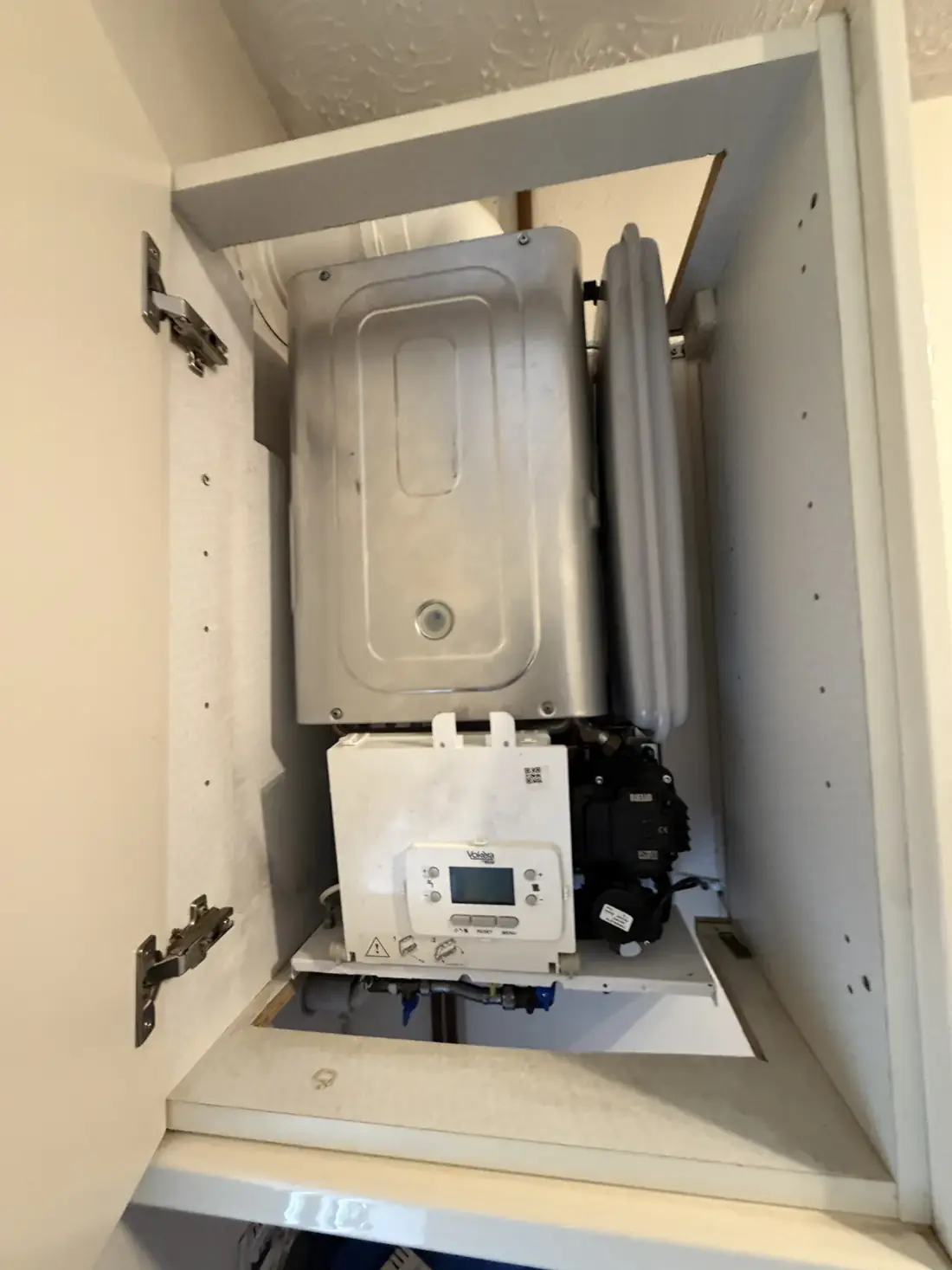
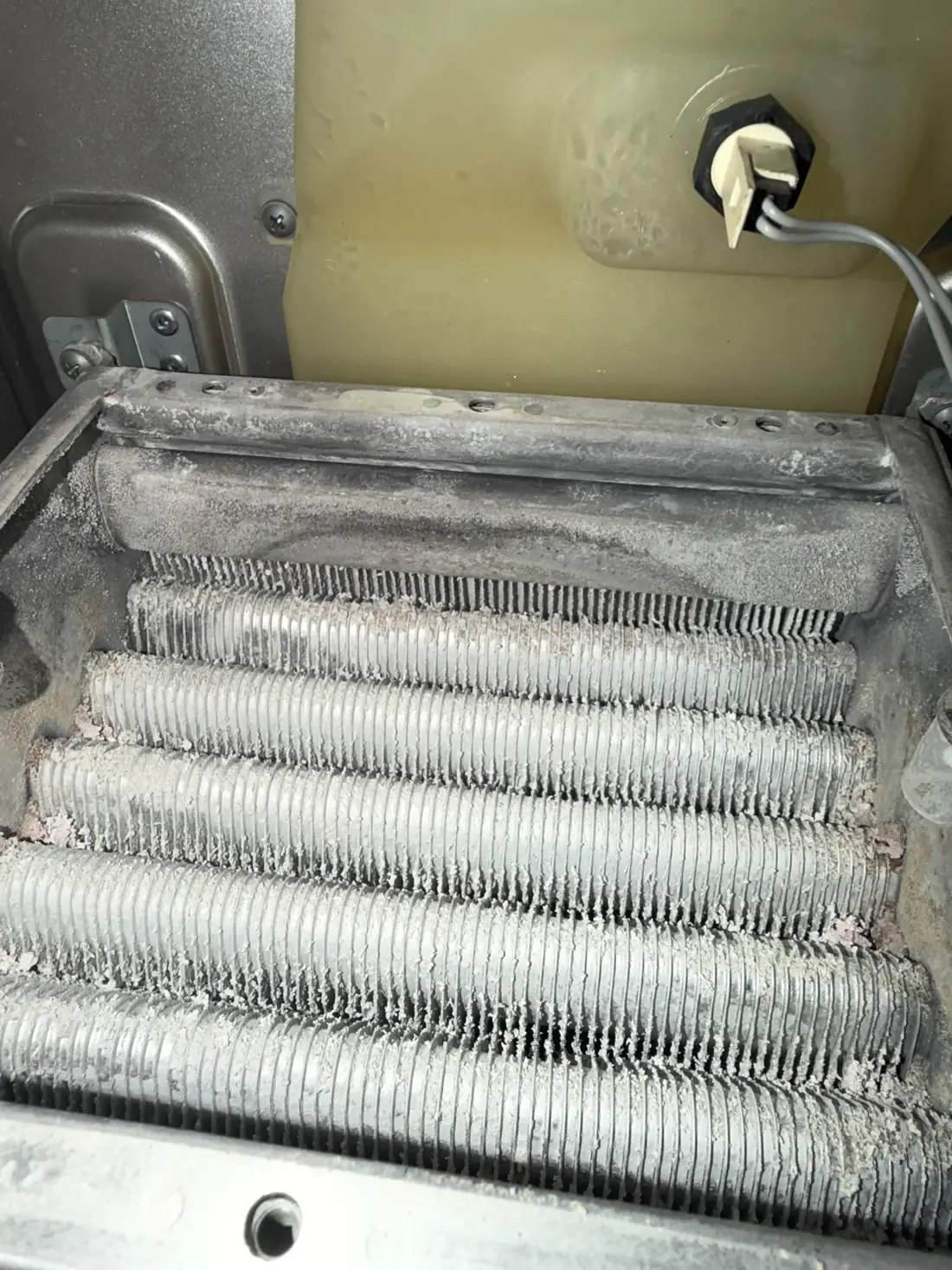
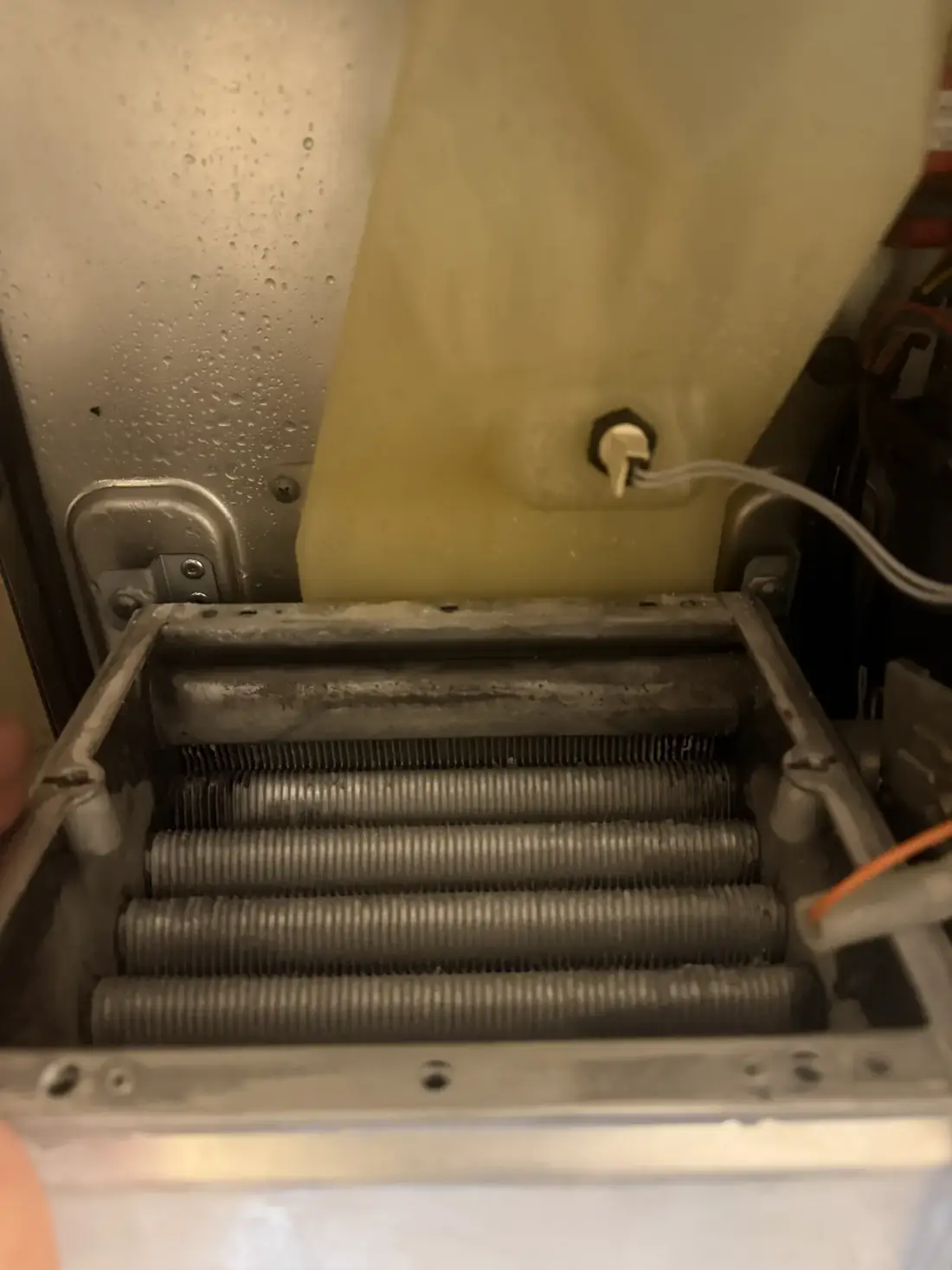
The boilerThe Vokera in its kitchen cupboard. From the outside, nothing to see.BeforeThe heat exchanger with the burner off: fins clogged with debris. This is what a high CO reading looks like.AfterThe same heat exchanger after the strip-down and clean, fins clear so the flue gases can pass through as designed.
The service
Every boiler service we do starts with the flue gas analyser, before anything is touched, because the combustion reading tells you how the boiler is actually burning rather than how it looks. On this Vokera the carbon monoxide reading was over 999 ppm, which is as high as the analyser can display. That is the boiler telling you that combustion is badly incomplete, and it is not something to note down and come back to next year.
What we found
With the case and the burner off, the cause was obvious. The heat exchanger, the finned block that the flame heats and the water passes through, was fouled with debris packed between the fins. You can see it in the second photo. When the fins are blocked the flue gases cannot pass through the block properly, the flame does not get the air it needs, and combustion goes off. Carbon monoxide is the result.
The fix
This is what a full strip-down service is for. We stripped the boiler down, cleaned the heat exchanger fins and the burner, and replaced the gaskets and seals that get disturbed in the process, which are included in the strip-down price rather than billed as extras. Then we reassembled, checked the boiler over, and put the analyser back in the flue. The CO reading had come down from over 999 ppm to 112 ppm, comfortably within the safe range.
The customer was left with a boiler that is safe to run, and one that will last longer, because a heat exchanger running clean is under far less stress than one choked with debris.
Why we recommend a full strip-down
A basic service checks the boiler and its combustion. It does not take the burner off and clean the heat exchanger, and on a boiler that has never been stripped down, that is where the problem hides. Our general advice is a full strip-down every five to eight years, but there is an exception. On some models, Ideal and Vokera among them, we recommend a full strip-down every year, because in our experience their heat exchanger designs foul faster than most and we see readings like this one far more often on them.
If your boiler is one of those, or it has never had the burner off, the £185 strip-down is money well spent. It is also the service that most often finds the cracked heat exchangers and blocked flues that a basic check misses. Read more about making a boiler last longer in our advice section.
What it costs
A full strip-down service is £185, including the gaskets and seals and an inhibitor top-up for the system. A basic service is £95 and an intermediate service £125. The full breakdown of what each one includes is on our boiler servicing page. If you are not sure which you need, tell us the make, model and age of the boiler and when it was last serviced, and we will tell you straight.
Common questions
What is a full strip-down service?
A service where the burner comes off and the heat exchanger and burner are physically cleaned, rather than just inspected. It includes everything in our basic and intermediate services: safety devices, seals, flue and combustion checks, a full operational check, the condensate trap, draining and recharging the expansion vessel, and cleaning the electrodes. Gaskets, seals and an inhibitor top-up are included in the price.
Why was the CO reading high?
The heat exchanger fins were blocked with debris, so the flue gases could not pass through the block as designed and the flame was not burning cleanly. The analyser read over 999 ppm, the top of its scale. Once the block and burner were cleaned it read 112 ppm, within the safe range. A high reading on the analyser almost always has a physical cause like this, and finding it is the point of the service.
Is a high CO reading on the analyser dangerous to me?
The analyser measures what is inside the flue, which on a room-sealed boiler is carried outside. It is not the same as carbon monoxide in your room. But a boiler burning that badly is a boiler that should not be left, because the things that keep flue gases out of the room, seals and the flue itself, are the next things to fail on a neglected appliance. Get it serviced, and fit a carbon monoxide alarm if you have not got one.
How often should an Ideal or Vokera be stripped down?
Every year, in our experience. Their heat exchangers foul more quickly than most, and we see high combustion readings on them far more often than on other makes. For most other boilers a full strip-down every five to eight years is enough, with a basic or intermediate service in between.
Job attended and photographed by our engineers, April 2026. Written up by Saeed Iqbal, the engineer who leads Synergy Gas & Plumbing (Gas Safe registered 594385). More on what each service level includes is on our boiler servicing page, and every job we write up is on the case studies index.
What it costs
Updated Sept 2026
From £95
Basic service £95, intermediate £125, full strip-down £185.
No travel charge within 10 miles of B20 2JS. Further out, £2 per mile may apply — always agreed before anything is booked.
Heat exchanger stripped and cleaned on a Viessmann that is showing its age, then the Tempest cylinder serviced on the same visit. Customer given a straight view on when to start planning a replacement boiler.
A London landlord booked online for a tenant with no hot water from an Intatec Hiper HIU. The pressure independent control valve was sticking and the strainer behind it was seized and packed with dirt. Freed, stripped, cleaned and refitted; a new valve booked for a return visit.
The main heat exchanger had failed on a boiler that had done 17 years, so the numbers pointed one way. Like-for-like swap into the same cupboard, Worcester magnetic filter fitted, system dosed, guarantee registered.