24 hour emergency call-out07413 385767
Answered 7 days a week, day or night
Case study · Gas safety inspection · Chelmsley Wood
A landlord inspection in Chelmsley Wood that found carbon monoxide: the Glow-worm capped off, the family told, and the flue collector replaced
Rust behind the heat exchanger, a CO reading on the analyser, and a young family in the house. Made safe on the spot, then repaired with the landlord's go-ahead.
We attended a landlord gas safety inspection in Chelmsley Wood on a Glow-worm heat-only boiler. Inside the case there were signs of rust at the rear of the heat exchanger, and when we checked the boiler on the flue gas analyser we found a carbon monoxide reading. We capped the boiler off and made it safe there and then, and told the tenant and the landlord straight away. The tenant had a young family in the house and was glad it had been picked up. The landlord gave us permission to replace the parts needed: the flue collector, which had cracked, and its gaskets. Boiler repaired, retested and back on. Another happy tenant and landlord.
Request a gas safety certificate
Four details and we will get back to you to arrange a time. Prefer to talk? Call 07413 385767.
£90 covers the boiler and cooker; each extra appliance is £15. Add a basic service on the same visit for £50.
No travel charge within 10 miles of B20 2JS. Further out, £2 per mile may apply — always agreed before anything is booked. Full price list
Smell gas now? Do not use this form or wait for a reply. Call the National Gas Emergency Service free on 0800 111 999 (24 hours). If you are using a mobile, make the call from outside. Open doors and windows, do not switch electrics on or off, do not smoke or use naked flames, and turn the gas off at the meter if it is safe to do so, unless the meter is in a cellar or basement. Once the supply has been made safe, we can trace and repair the fault.
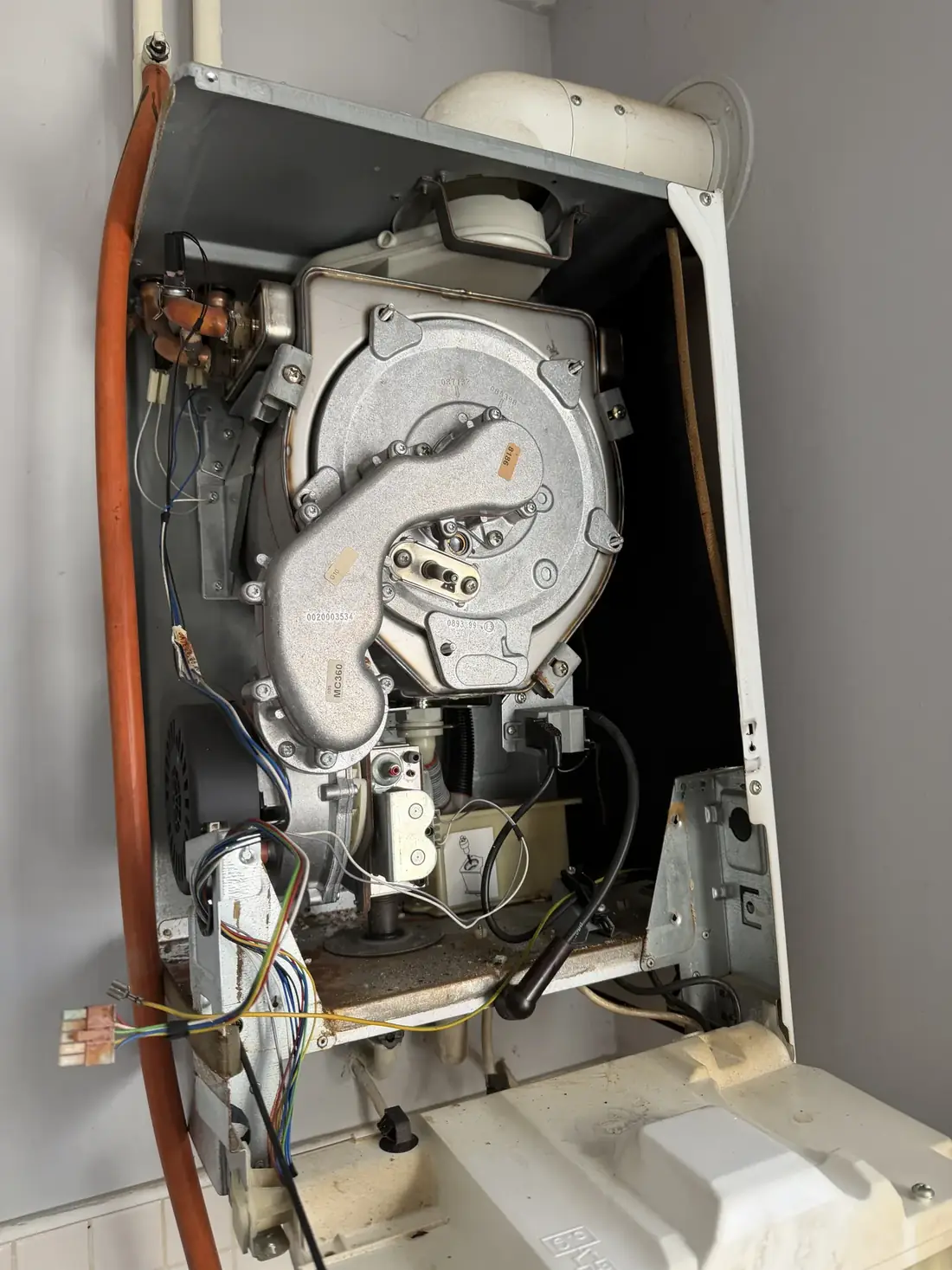
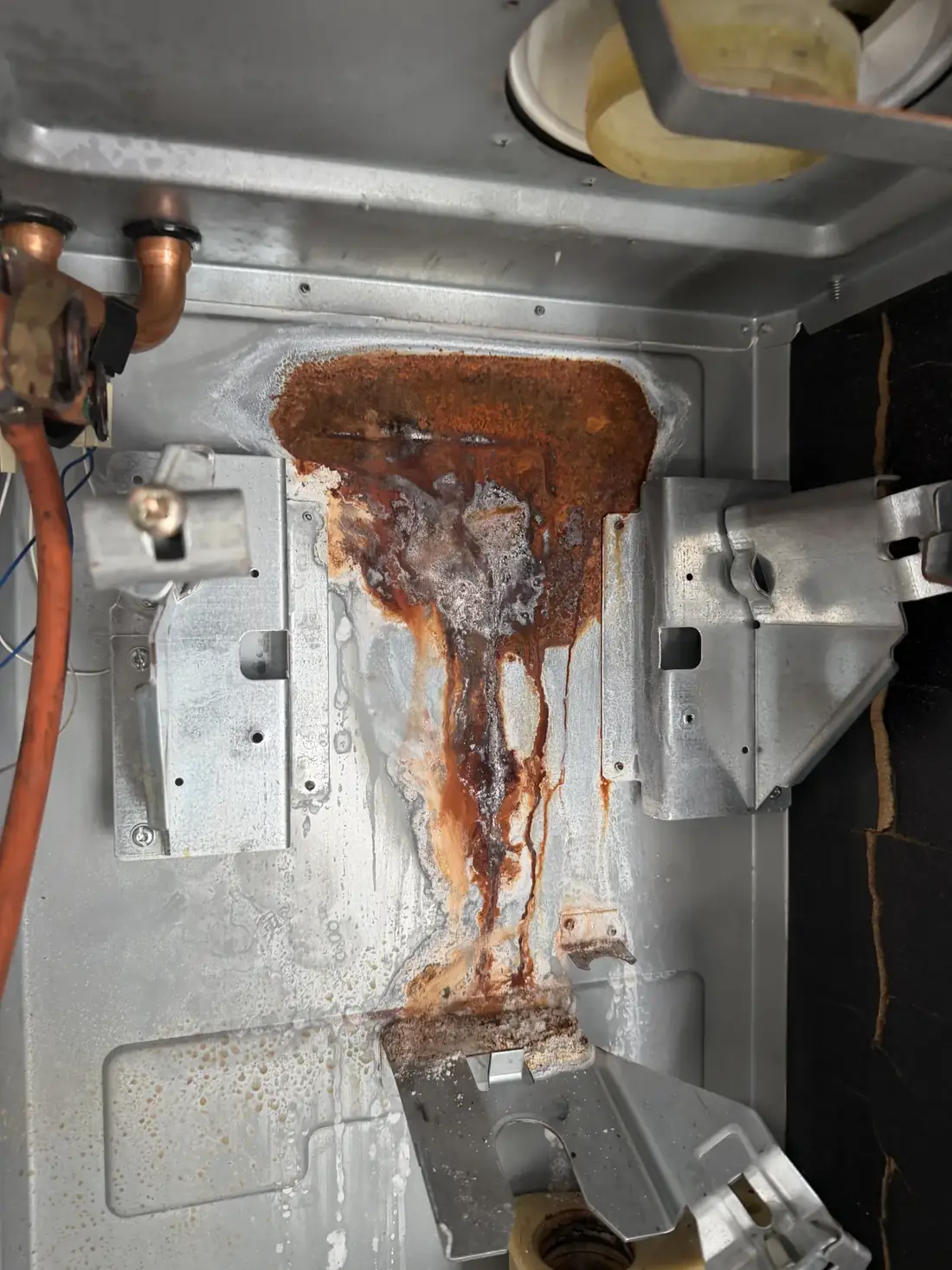
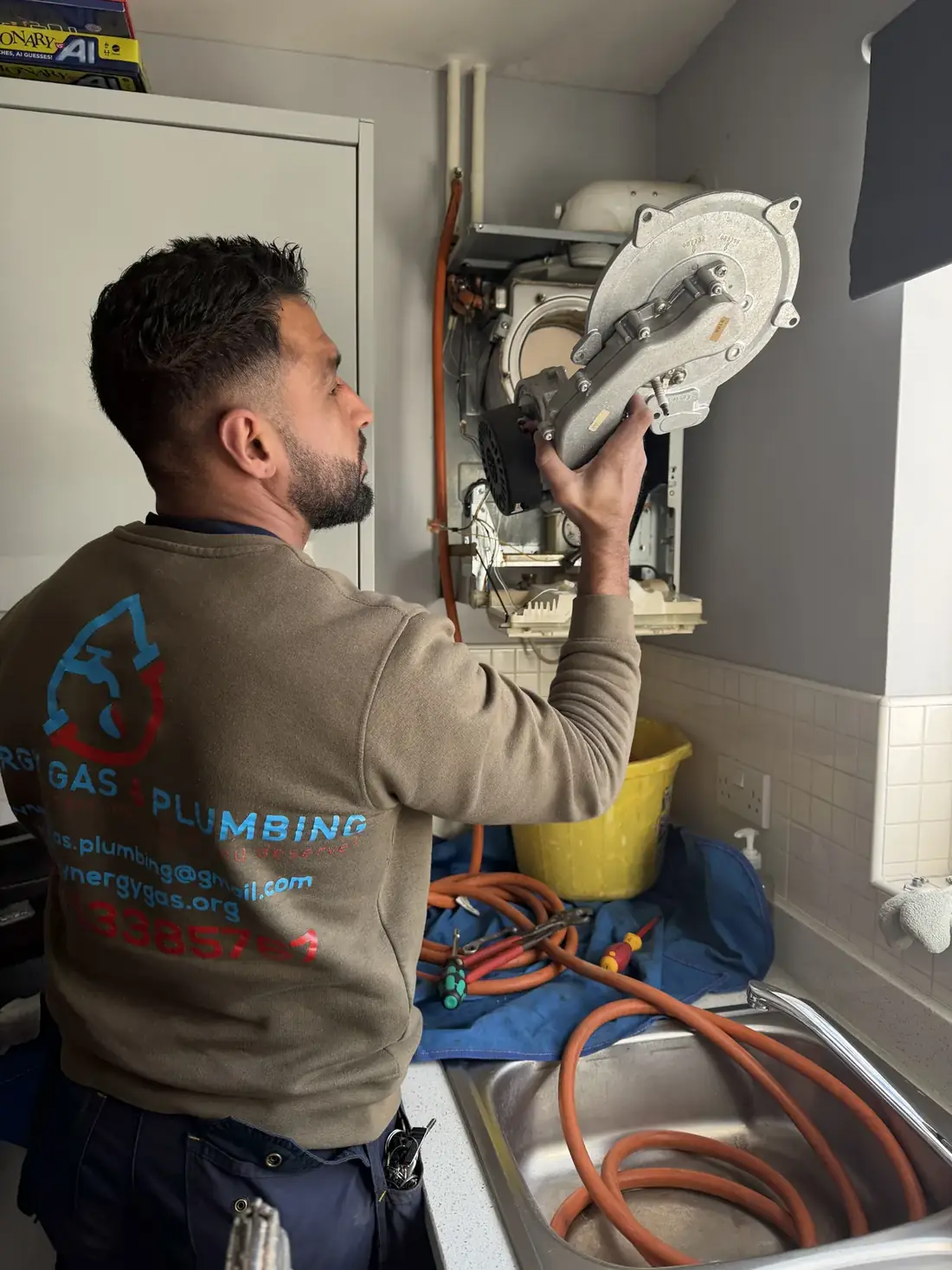
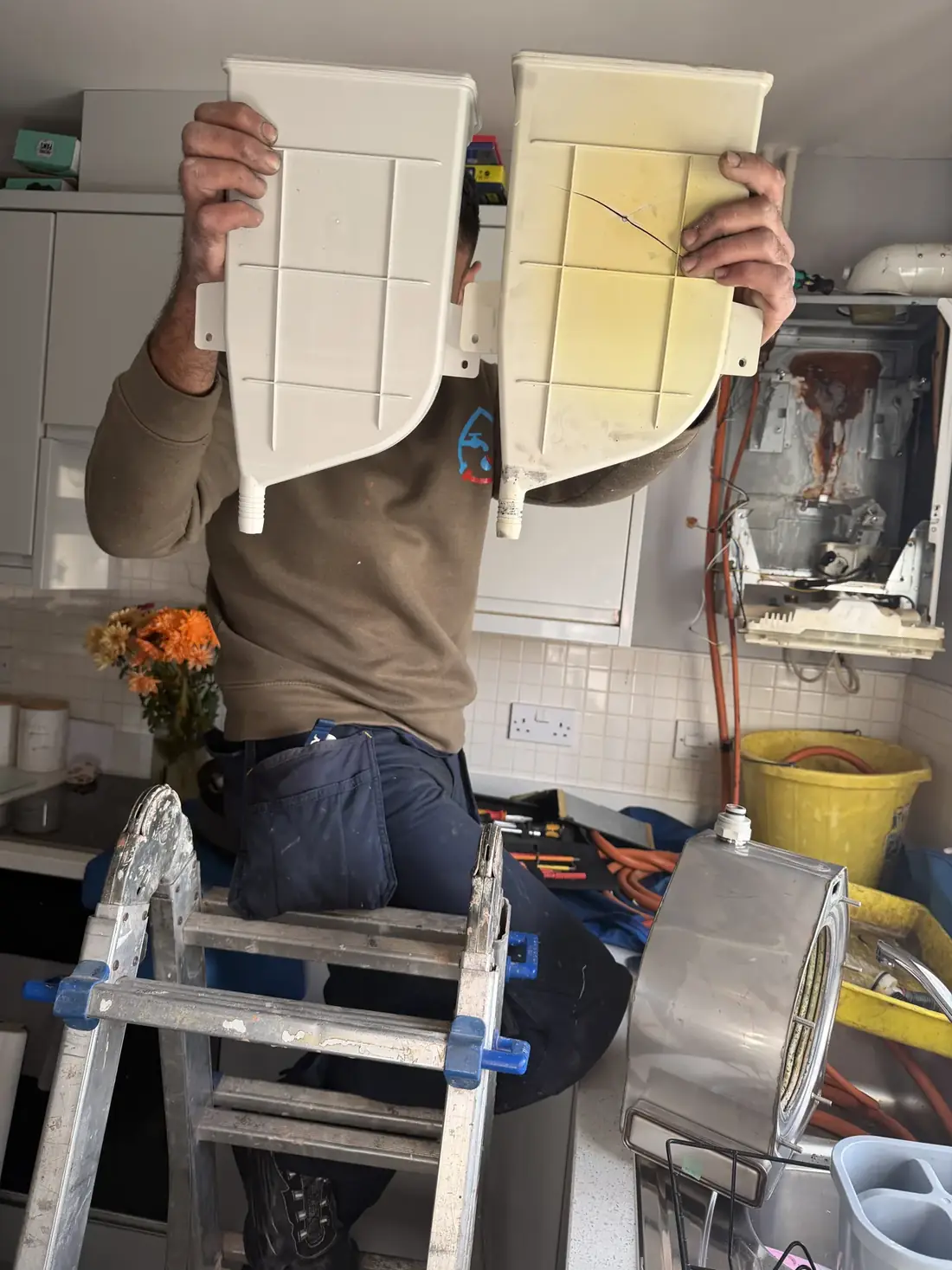
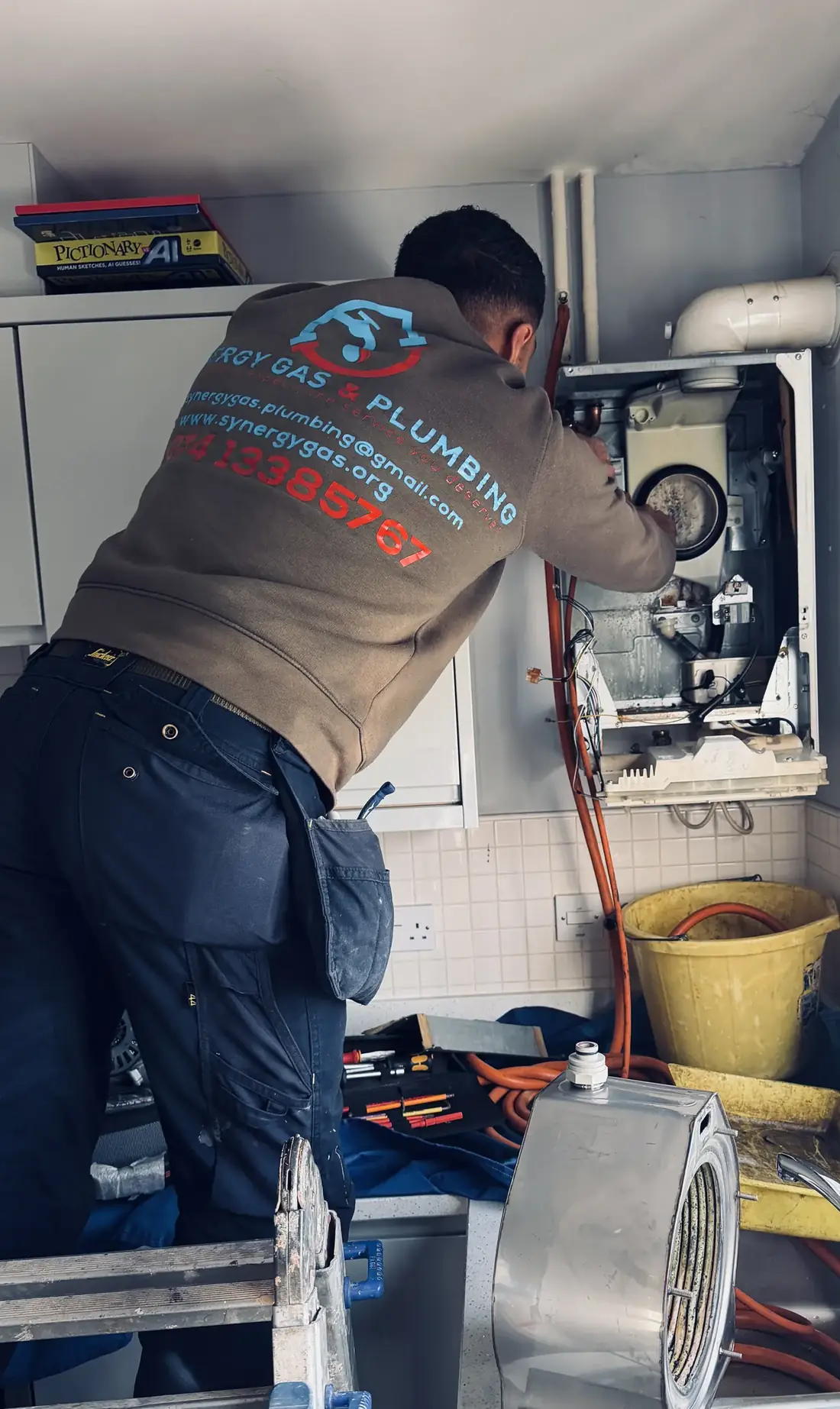
The inspectionThe Glow-worm with the case off. Fan and flue collector assembly on the heat exchanger, and the first signs of rust below.What we foundRust and corrosion across the floor of the case behind the heat exchanger. Flue products had been getting where they should not.Getting to itThe fan and heat exchanger assembly out of the boiler to reach the flue collector behind it.The causeThe old flue collector, yellowed and cracked, held beside the new one.The rebuildRefitting the assembly with the new collector and gaskets before retesting on the analyser.
The inspection
This was a routine landlord gas safety inspection on a rented house in Chelmsley Wood: a Glow-worm heat-only boiler in the kitchen, the annual check the landlord is required to have done. The tenant had a young family. Routine is how these visits usually go, and it is why they matter, because the one time it is not routine is the one that counts.
What we found
With the case off, there were signs of rust at the rear of the heat exchanger and across the floor of the case. Rust in that position on a boiler like this means flue products, the hot, wet gases from the burner, have been escaping inside the case rather than going up the flue. The next check told us how serious it was. We put the flue gas analyser on the boiler and found a carbon monoxide reading. A boiler leaking its own flue gases inside the case is not one to leave running in a house with children in it.
Making it safe
We capped the boiler off and made it safe on the spot, and told the tenant and the landlord what we had found and why the boiler could not be used until it was repaired. The tenant was relieved rather than annoyed: with a young family in the house, they were glad it had been picked up. That is the part of a gas safety check that never shows up on the certificate.
The repair
The landlord gave us permission to replace the parts needed. The cause was the flue collector, the plastic hood that gathers the flue gases off the heat exchanger and directs them to the fan and the flue. It had yellowed with heat and cracked, and the gaskets that seal it had gone with it. You can see the old one next to the new one in the photos: the crack across it is plain. To reach it the fan and heat exchanger assembly had to come out of the boiler. We fitted the new collector and gaskets, rebuilt the assembly, put the boiler back on, and checked it again on the analyser before we left it with the family. Another happy tenant, and a landlord with a boiler that passes.
Why the analyser matters on an inspection
Rust on its own is a warning. It is the analyser that turns a warning into a decision, because it measures what the boiler is actually producing. Carbon monoxide has no smell, no colour and no taste, and a family living with a boiler like this would have had no way of knowing. Our guide to carbon monoxide symptoms and signs explains what to look for and what to do. On every gas safety check we do, the boiler is checked on the analyser, and if you are a landlord using someone else, it is worth asking whether theirs is.
For landlords
The law requires an annual gas safety check on every rented property and a copy of the certificate for the tenant. What it cannot make anyone do is look properly. A check that finds a fault like this one, makes the appliance safe, and gets it repaired is doing the job the law intends. Our landlord page covers how we run certificates, servicing and boiler repairs together, and our landlord gas safety guide sets out the duties in plain English.
What it costs
A landlord gas safety certificate is £90 for a boiler and cooker, with each additional appliance £15, and a basic boiler service can be added for £50 on the same visit. Where a fault is found, the repair is quoted before we do it, with parts priced up front. Full details are on our gas safety certificate page.
Common questions
What does it mean when a boiler is capped off?
The gas supply to the appliance is disconnected and sealed so it cannot be used, and the appliance is labelled as unsafe. It is what a Gas Safe engineer must do when an appliance is found to be dangerous, and it is done with the occupier's agreement. The rest of the gas supply, such as the cooker, stays on if it is safe.
What is a flue collector?
On a fan-flued boiler like this Glow-worm it is the hood that sits over the heat exchanger, collects the flue gases and directs them to the fan and out through the flue. It is usually plastic, and after years of heat it can discolour, distort and crack. Once it cracks, flue gases escape into the case instead of going outside, which is what the rust and the carbon monoxide reading were telling us.
Would the tenant have noticed anything?
Possibly not. Carbon monoxide cannot be smelt, seen or tasted, and a boiler leaking inside its case can look and sound normal. Sometimes there is staining on the case or a smell of fumes, but often the first sign is someone feeling unwell. That is why the annual check, a carbon monoxide alarm, and an engineer who uses the analyser all matter.
Does a gas safety check include the analyser?
Ours does, on every boiler. The law sets out what a check must cover, and a flue gas analyser reading is the most reliable way to know an appliance is burning safely. If your current engineer's certificate does not show combustion readings, ask why.
Do you cover Chelmsley Wood?
Yes. Chelmsley Wood, Marston Green and the B37 postcode are covered from our Handsworth Wood base, along with the rest of Solihull borough. We can usually bundle a service or a repair into the same visit as a landlord certificate.
Job attended and photographed by our engineers in Chelmsley Wood, November 2025. Written up by Saeed Iqbal, the engineer who leads Synergy Gas & Plumbing (Gas Safe registered 594385). More recent jobs in the area are on our Solihull page, and every job we write up is on the case studies index. Our Glow-worm boiler repair page covers the faults and codes we are asked about most on Glow-worm boilers.
What it costs
Updated Sept 2026
£90 boiler + cooker
£90 covers the boiler and cooker; each extra appliance is £15. Add a basic service on the same visit for £50.
No travel charge within 10 miles of B20 2JS. Further out, £2 per mile may apply — always agreed before anything is booked.
Heat exchanger stripped and cleaned on a Viessmann that is showing its age, then the Tempest cylinder serviced on the same visit. Customer given a straight view on when to start planning a replacement boiler.
A London landlord booked online for a tenant with no hot water from an Intatec Hiper HIU. The pressure independent control valve was sticking and the strainer behind it was seized and packed with dirt. Freed, stripped, cleaned and refitted; a new valve booked for a return visit.
The main heat exchanger had failed on a boiler that had done 17 years, so the numbers pointed one way. Like-for-like swap into the same cupboard, Worcester magnetic filter fitted, system dosed, guarantee registered.