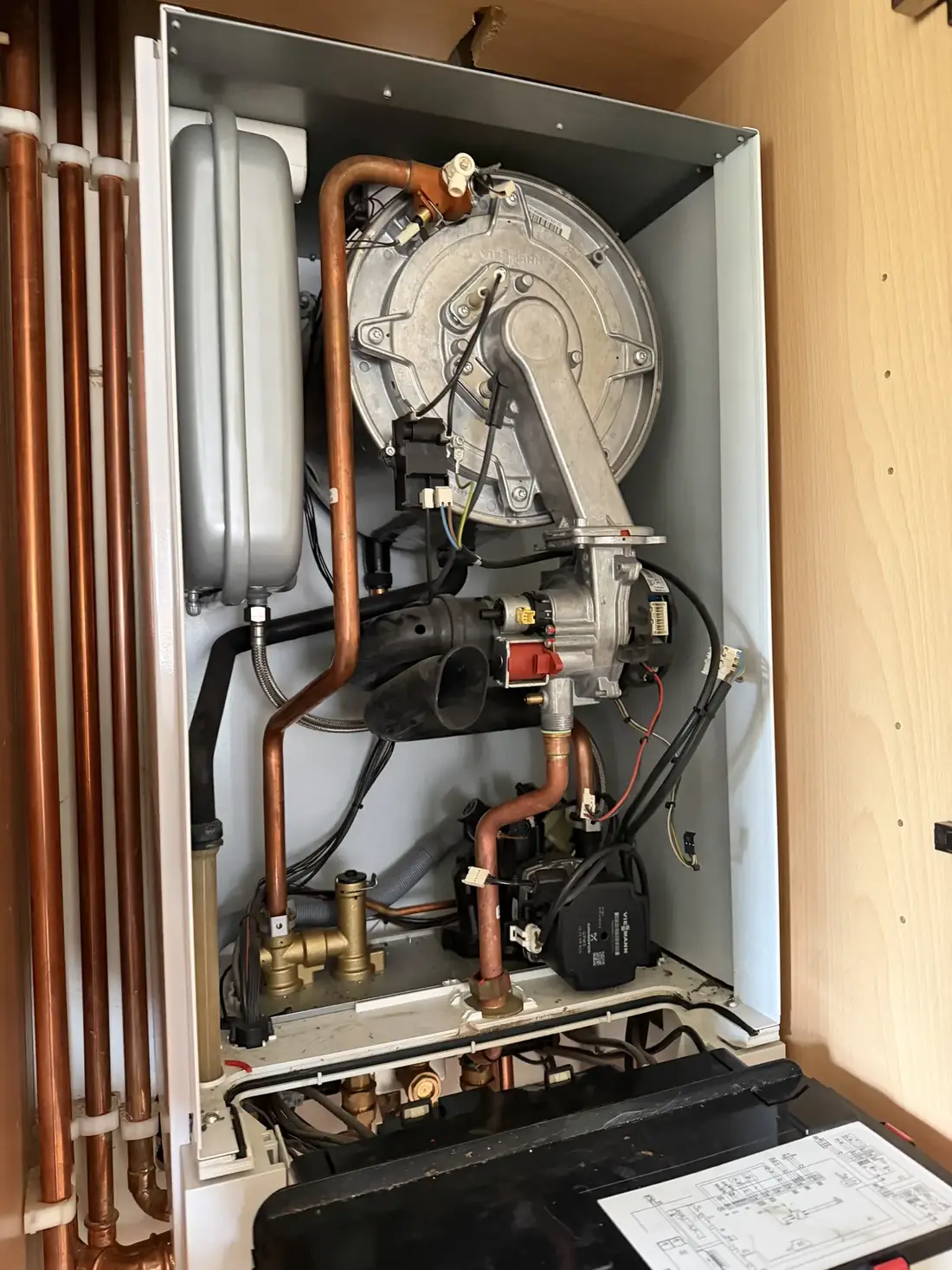
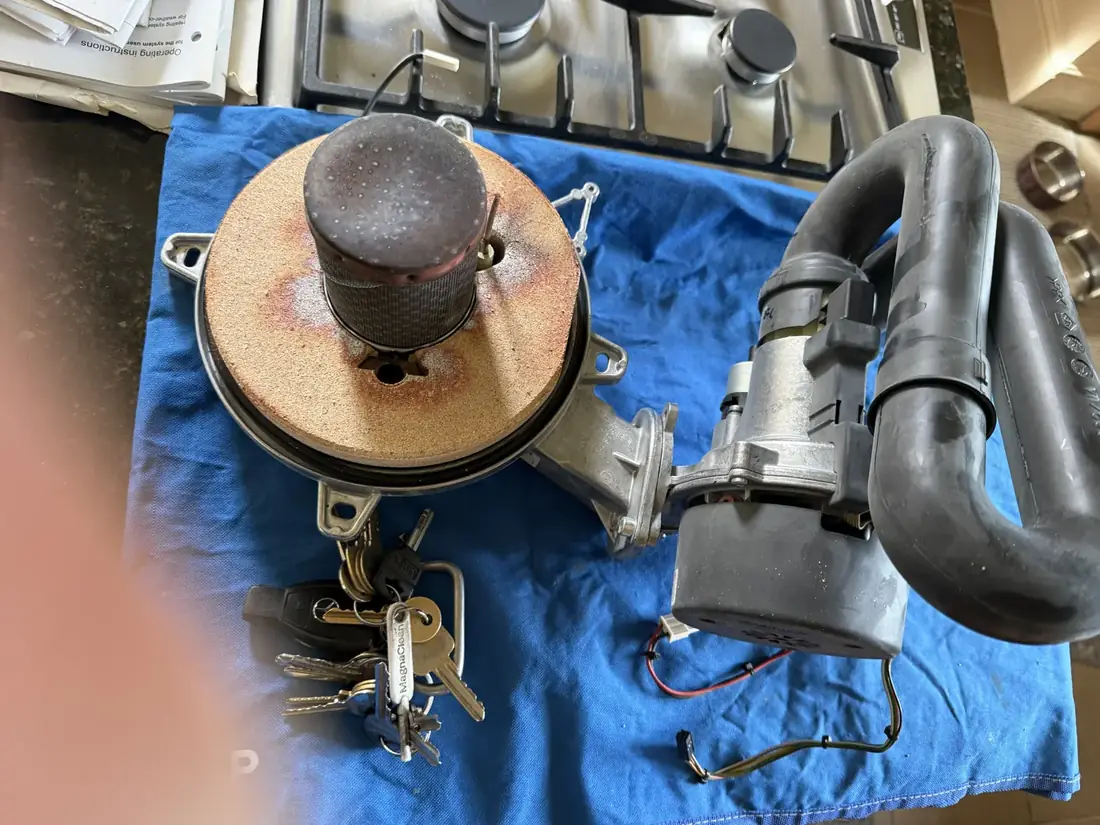
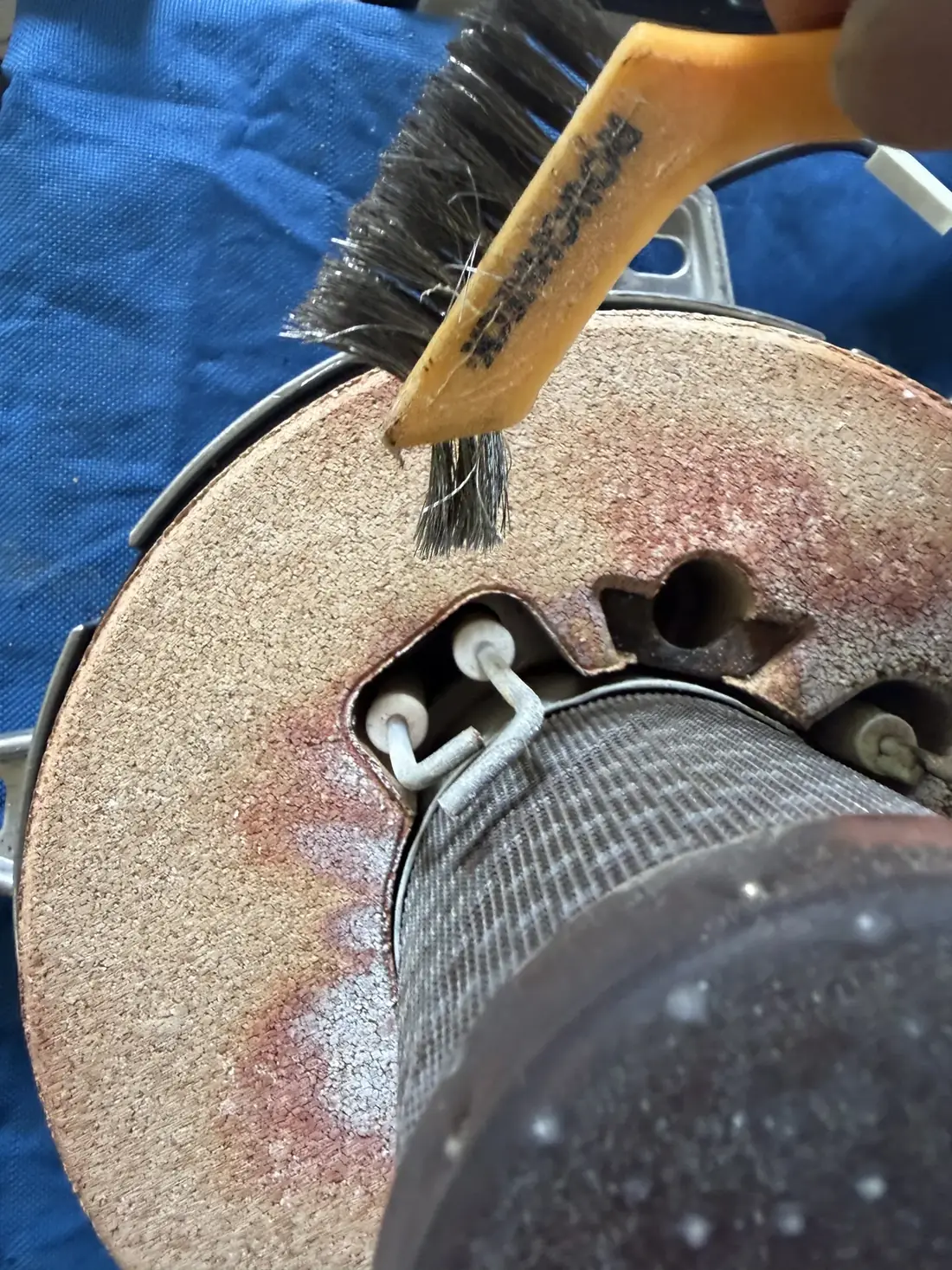
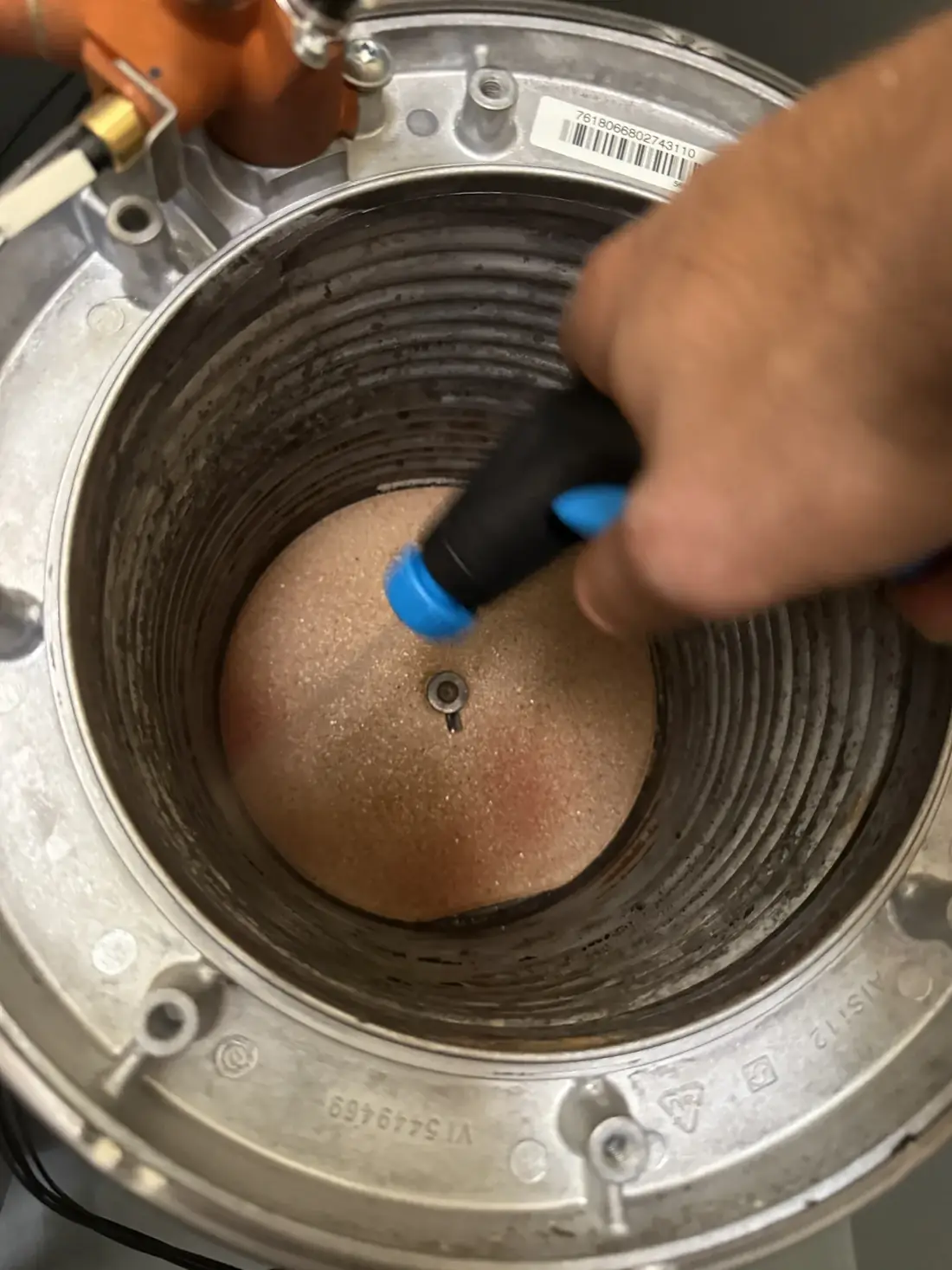
A full strip-down service on a Viessmann boiler in a Sutton Coldfield kitchen. We took the fan and burner assembly out, cleaned the burner door and its insulation, cleaned the inside of the heat exchanger, replaced the gaskets and seals, checked the electrodes and the condensate trap, reassembled and checked the combustion on the analyser. Then we walked the property and bled every radiator, so the customer got a clean boiler and a balanced, air-free system rather than one or the other.
Request a boiler service
Four details and we will get back to you to arrange a time. Prefer to talk? Call 07413 385767.
Basic service £95, intermediate £125, full strip-down £185.
No travel charge within 10 miles of B20 2JS. Further out, £2 per mile may apply — always agreed before anything is booked. Full price list
Smell gas now? Do not use this form or wait for a reply. Call the National Gas Emergency Service free on 0800 111 999 (24 hours). If you are using a mobile, make the call from outside. Open doors and windows, do not switch electrics on or off, do not smoke or use naked flames, and turn the gas off at the meter if it is safe to do so, unless the meter is in a cellar or basement. Once the supply has been made safe, we can trace and repair the fault.
Before we startedThe Viessmann with the case off. Fan and burner assembly on the left, pump and valves on the right, and the expansion vessel below.Out on the sheetFan, burner and burner door removed as one assembly and laid out on a dust sheet on the worktop.The burner doorWire-brushing the burner door insulation and around the electrodes. The discolouration is normal; the debris is what we are after.The heat exchangerCleaning the inside of the stainless heat exchanger coil with the burner out. This is the part a basic service never sees.
The service
The customer booked a full strip-down service on their Viessmann. It is a well-made boiler with a stainless steel heat exchanger, but well-made does not mean maintenance-free, and a strip-down every few years is what keeps one running cleanly for twenty. The photos above are the job as it happened, on a dust sheet on the kitchen worktop.
What a full strip-down involves
Combustion check first. Analyser in the flue before anything is touched, so we know how the boiler was burning when we arrived.
Fan and burner out. On a Viessmann the fan, gas valve outlet and burner door come off as one assembly. The whole thing came out and went on the sheet.
Burner door and insulation cleaned. Wire-brushed and inspected, with the electrodes cleaned and checked for wear.
Heat exchanger cleaned. The inside of the stainless coil brushed and cleared, then the condensate trap cleaned and checked.
Gaskets and seals replaced. Every seal we disturbed went back new. They are included in the strip-down price, not billed as extras.
Reassembled and checked. Safety devices, seals, flue and combustion rechecked on the analyser, operational check, expansion vessel checked, inhibitor topped up, and a service report written.
The walk round the house
A service is about the boiler, but the boiler is only half the system. Before we left we walked the property and bled every radiator. Air collects at the top of radiators over a year, especially upstairs, and it leaves cold patches, noisy pipes and a boiler that is working harder than it needs to. Ten minutes with a bleed key on the way out, and a pressure top-up afterwards, is one of the cheapest improvements a heating system ever gets. We do it as a matter of course.
Which service does your boiler need?
A basic service is right for a newer boiler that is serviced every year and has never had a problem. An intermediate service adds draining, recharging the expansion vessel and cleaning the electrodes, and we suggest it every three years once a boiler is past three years old. A full strip-down, like this one, is the one that takes the burner off and cleans the heat exchanger, and we recommend it every five to eight years on most boilers, or every year on models whose heat exchangers foul quickly. If you are not sure, tell us the make, age and service history and we will say which one you need rather than sell you the dearest.
What it costs
A full strip-down service is £185, including gaskets, seals and an inhibitor top-up. A basic service is £95 and an intermediate service £125. Bleeding the radiators is part of the visit, not an extra. The full breakdown is on our boiler servicing page, and September and October are the months to book, before the first cold week fills the diary with breakdowns.
Common questions
How often should a Viessmann be serviced?
Annually, like every gas boiler, to keep the warranty valid and the combustion checked. On top of that we suggest an intermediate service every three years once it is past three years old, and a full strip-down every five to eight years. Viessmann heat exchangers hold up well, but they still collect debris, and the strip-down is what clears it.
Do you bleed the radiators as part of a service?
Yes. On a service visit we walk the property and bleed every radiator, then top the system pressure back up. It takes ten minutes and it makes a real difference to how the system heats, so we do it as a matter of course rather than as an extra.
Is a full strip-down worth it on a boiler that is working fine?
That is exactly when to do it. A strip-down on a boiler that is running well keeps it running well, and it catches the debris, worn seals and tired electrodes before they cause a breakdown in January. Waiting until it fails means paying for a repair as well as a service.
What is included in the £185?
Everything in the basic and intermediate services, plus removing and cleaning the burner and heat exchanger, new gaskets and seals for everything we disturb, and a central heating inhibitor top-up. Radiator bleeding and a written service report are part of the visit. The only extra would be a part we find worn and agree with you to replace.
Job attended and photographed by our engineers in Sutton Coldfield, April 2026. Written up by Saeed Iqbal, the engineer who leads Synergy Gas & Plumbing (Gas Safe registered 594385). More recent jobs in the area are on our Sutton Coldfield page, and every job we write up is on the case studies index. Our Viessmann boiler repair page covers the faults and codes we are asked about most on Vitodens boilers.
What it costs
Updated Sept 2026
From £95
Basic service £95, intermediate £125, full strip-down £185.
No travel charge within 10 miles of B20 2JS. Further out, £2 per mile may apply — always agreed before anything is booked.
Heat exchanger stripped and cleaned on a Viessmann that is showing its age, then the Tempest cylinder serviced on the same visit. Customer given a straight view on when to start planning a replacement boiler.
A London landlord booked online for a tenant with no hot water from an Intatec Hiper HIU. The pressure independent control valve was sticking and the strainer behind it was seized and packed with dirt. Freed, stripped, cleaned and refitted; a new valve booked for a return visit.
The main heat exchanger had failed on a boiler that had done 17 years, so the numbers pointed one way. Like-for-like swap into the same cupboard, Worcester magnetic filter fitted, system dosed, guarantee registered.