A tenant in a landlord's property in Walsall reported the boiler locking out on overheat. An overheat lockout means the boiler is making heat that is not being carried away, and the usual reason is that the water has stopped moving. We found the system pump had burnt out. We carry pumps as van stock, so it was replaced on the same visit and the heating brought back. The pump had failed because the system was full of sludge, and we said so: we recommended a system flush, and advised the landlord that this repair was avoidable if the system had been regularly maintained.
Request an engineer
Four details and we will get back to you to arrange a time. Prefer to talk? Call 07413 385767.
£99 in office hours (Mon–Fri, 8am–5.30pm) covers attendance, diagnosis and the first hour. Parts and any further work are quoted and agreed before we carry on. Out of hours, the price is quoted by phone before we set off.
No travel charge within 10 miles of B20 2JS. Further out, £2 per mile may apply — always agreed before anything is booked. Full price list
Smell gas now? Do not use this form or wait for a reply. Call the National Gas Emergency Service free on 0800 111 999 (24 hours). If you are using a mobile, make the call from outside. Open doors and windows, do not switch electrics on or off, do not smoke or use naked flames, and turn the gas off at the meter if it is safe to do so, unless the meter is in a cellar or basement. Once the supply has been made safe, we can trace and repair the fault.
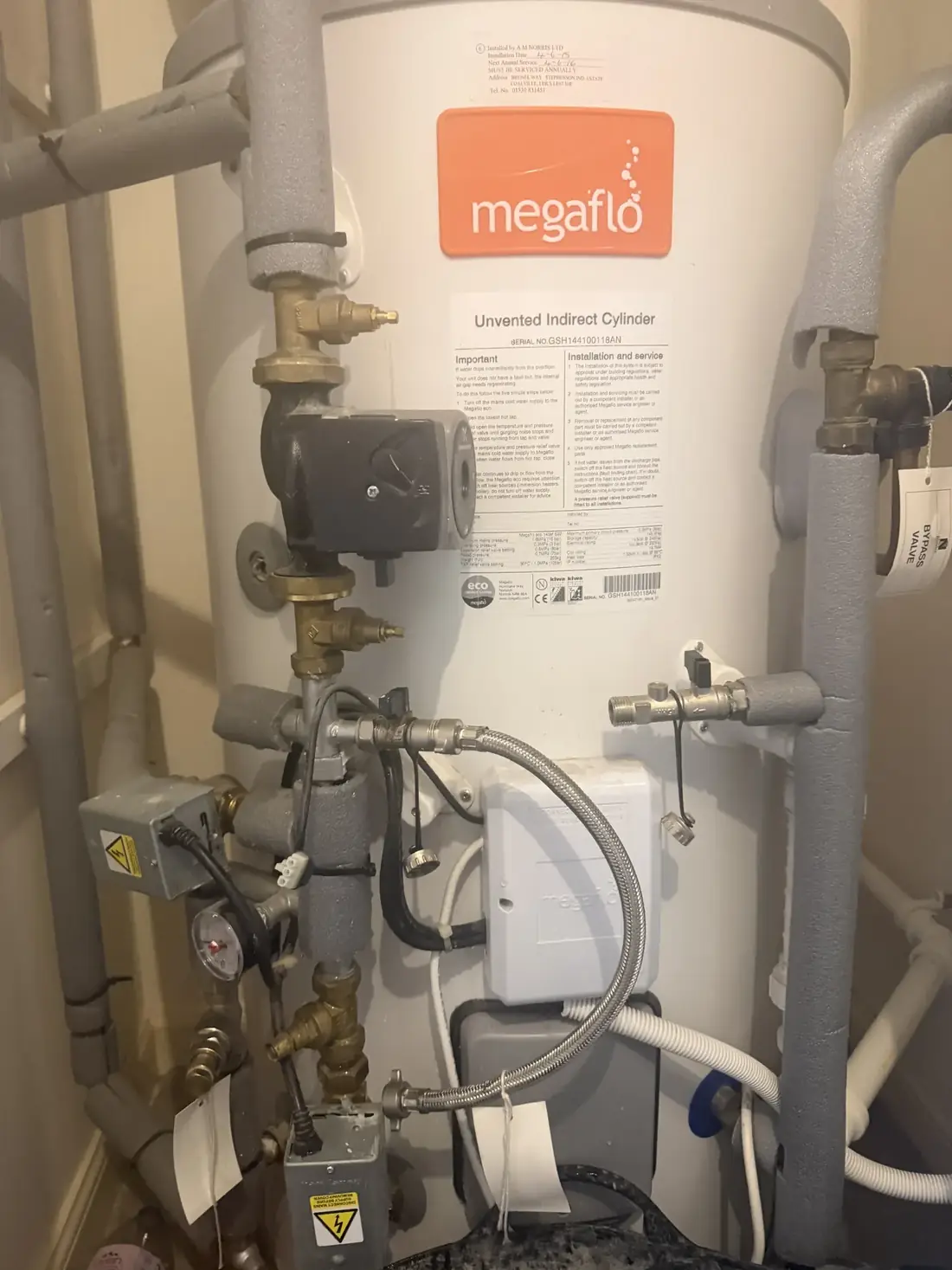
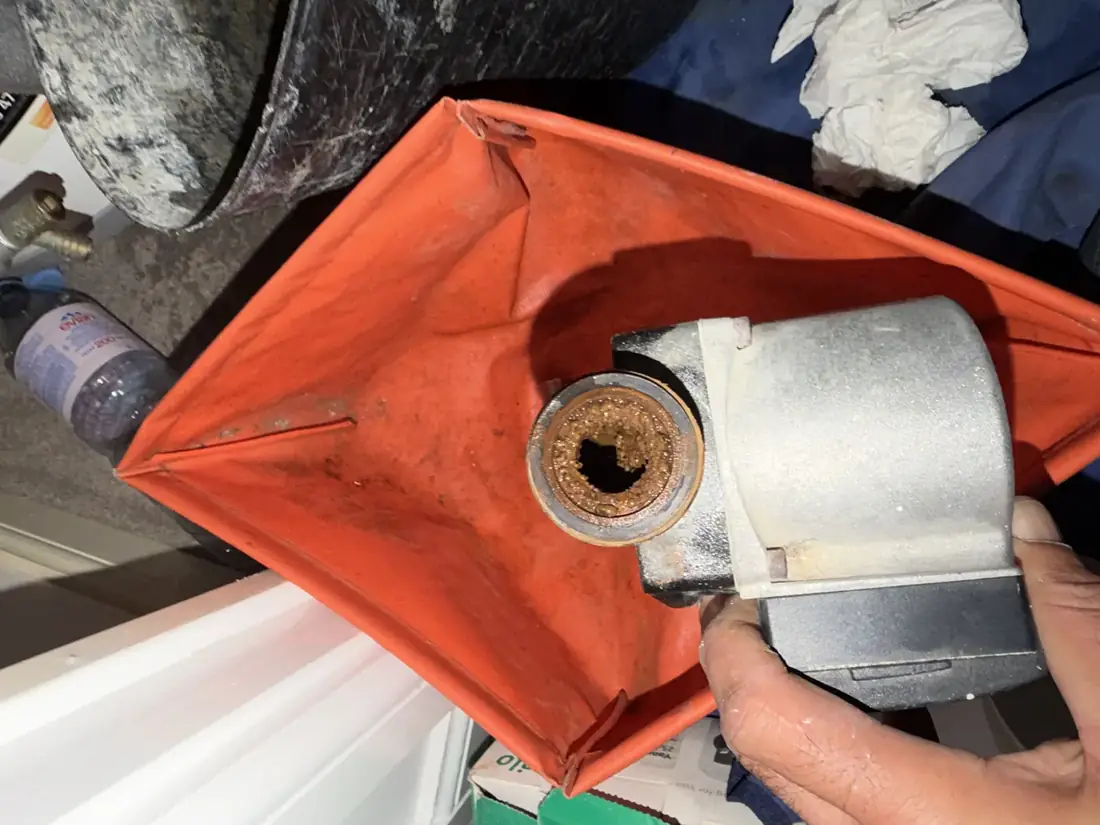
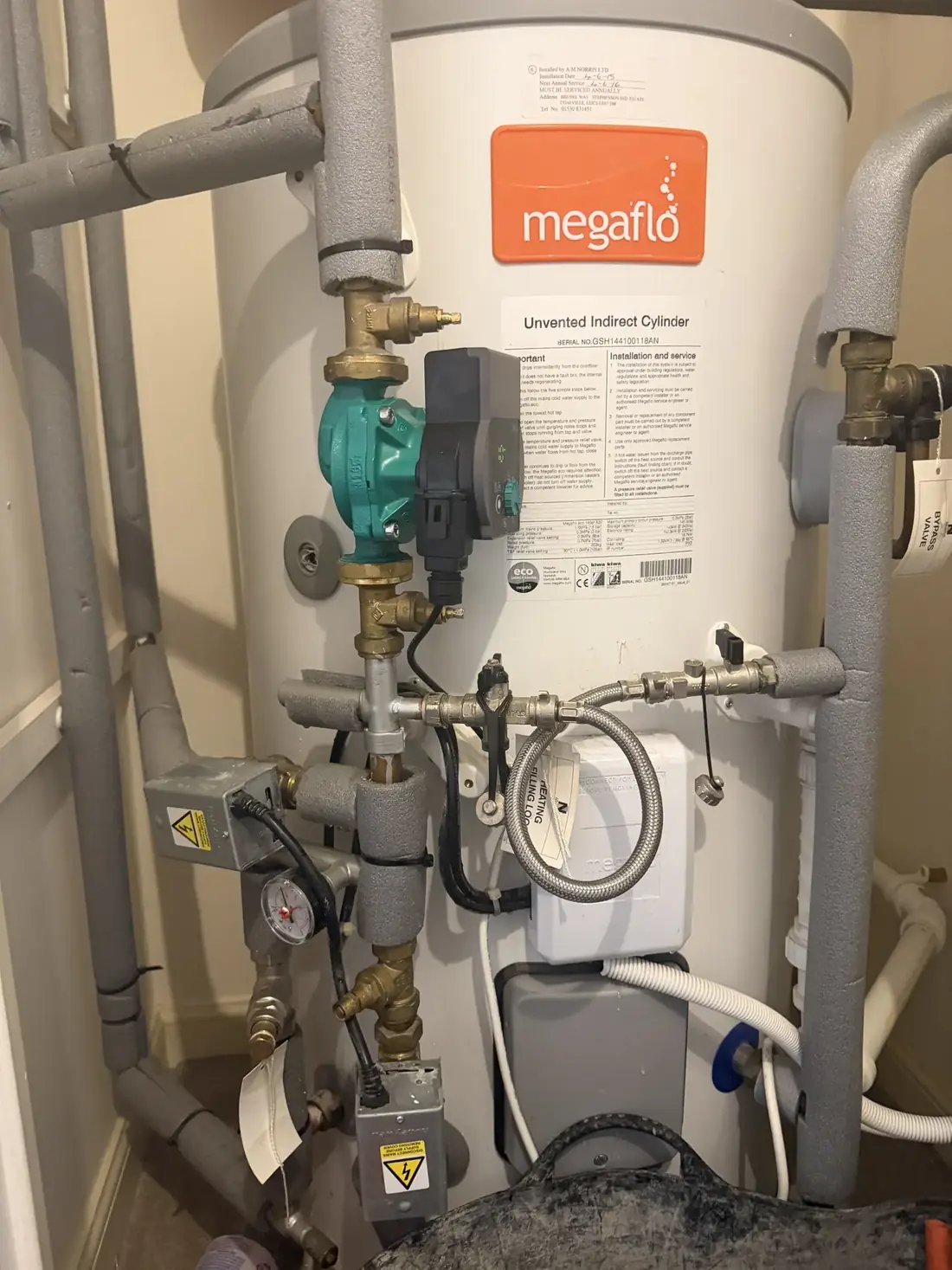
As foundThe failed pump on the pipework beside the unvented cylinder. The boiler was locking out on overheat because this had stopped circulating.The causeThe old pump off and turned over: the impeller housing choked with sludge. A pump cannot run against this for long.The fixNew pump fitted from van stock, pipework reconnected, and the heating back on the same visit.
The call
The tenant of a Walsall rental property had lost their heating. The boiler kept going into overheat lockout: it would fire, the temperature would climb too fast, and the safety thermostat would shut it down. An overheat lockout is the boiler protecting itself from heat it cannot get rid of, and nine times out of ten the reason the heat is not going anywhere is that the water has stopped moving round the system.
What we found
The system pump, mounted on the pipework next to the unvented cylinder, had burnt out. With it off and turned over the reason was plain: the inlet and impeller housing were choked with black sludge. Sludge is the iron oxide that builds up in a heating system that has never been flushed or dosed with inhibitor. It settles in radiators and pipework, it gets drawn through the pump, and eventually the pump is trying to move something closer to mud than water. The motor overheats and fails, the circulation stops, and the boiler locks out.
The fix
A circulating pump is one of the parts we carry as van stock, because it fails often enough to be worth the space. The old pump came off, the new one went on, the pipework was reconnected and the system was refilled, vented and run up. Heating back on for the tenant, one visit.
The conversation with the landlord
Fitting the pump fixed the symptom. It did not fix the cause, and we do not pretend otherwise. We recommended a system flush to the landlord, and we told them plainly that this repair was avoidable: a system that is maintained, with a magnetic filter fitted and the inhibitor topped up at each annual service, does not produce sludge like this, and does not eat pumps.
For a landlord the arithmetic is simple. A power flush is £550 for up to ten radiators and a magnetic filter is £320 fitted. A burnt-out pump is a callout, a part and a tenant without heating. Left alone, the sludge that took the pump goes for the boiler's heat exchanger next, and that is a far bigger bill. Our landlord page covers how we bundle servicing with the annual gas safety certificate so this kind of thing gets caught early.
What it costs
In office hours a boiler repair callout is £99, covering attendance, diagnosis and the first hour, with parts charged on top and quoted before we fit them. A pump is a modest part and we carry them. The flush and filter prices are on our power flushing page, and if you are not sure whether your system needs one, read do I need a power flush first.
Common questions
What causes a boiler to lock out on overheat?
The boiler is producing heat faster than the system can carry it away, so the water inside it gets too hot and the overheat thermostat shuts it down. The usual causes are a failed pump, a blockage, closed valves or air in the system. Sludge is behind a large share of them, because it blocks the flow and kills pumps.
How does sludge burn out a pump?
Sludge is heavy iron oxide from corrosion inside the system. The pump draws it through and it packs into the impeller housing. The motor then has to work far harder to turn, it overheats, and eventually it fails. Once the pump stops the boiler cannot shift its heat and locks out.
Do I need a flush after a new pump?
If the old pump was full of sludge, yes. A new pump in a dirty system will fail the same way. A power flush clears the sludge from the radiators and pipework, a magnetic filter catches what is left, and inhibitor stops it forming again. Without that, you are buying pumps.
How can a landlord avoid this?
Annual servicing that includes an inhibitor check, a magnetic filter on the system, and a flush when the water comes out black rather than after the pump has died. We bundle a boiler service with the landlord gas safety certificate so the system gets looked at every year in one visit.
Job attended and photographed by our engineers in Walsall, April 2026. Written up by Saeed Iqbal, the engineer who leads Synergy Gas & Plumbing (Gas Safe registered 594385). More recent jobs in the area are on our Walsall page, and every job we write up is on the case studies index.
What it costs
Updated Sept 2026
£99 diagnosis + first hour
£99 in office hours (Mon–Fri, 8am–5.30pm) covers attendance, diagnosis and the first hour. Parts and any further work are quoted and agreed before we carry on. Out of hours, the price is quoted by phone before we set off.
No travel charge within 10 miles of B20 2JS. Further out, £2 per mile may apply — always agreed before anything is booked.
Heat exchanger stripped and cleaned on a Viessmann that is showing its age, then the Tempest cylinder serviced on the same visit. Customer given a straight view on when to start planning a replacement boiler.
A London landlord booked online for a tenant with no hot water from an Intatec Hiper HIU. The pressure independent control valve was sticking and the strainer behind it was seized and packed with dirt. Freed, stripped, cleaned and refitted; a new valve booked for a return visit.
The main heat exchanger had failed on a boiler that had done 17 years, so the numbers pointed one way. Like-for-like swap into the same cupboard, Worcester magnetic filter fitted, system dosed, guarantee registered.