24 hour emergency call-out07413 385767
Answered 7 days a week, day or night
Case study · Boiler servicing · Full strip-down and system cleanse
A fifth-year full strip-down service on a Baxi 800, with the central heating system cleansed and protected at the same visit
Five years in, the burner came off and the heat exchanger was cleaned. The customer also asked for the system itself to be looked after: cleaner through the radiators for an hour, drained, and inhibitor added.
A Baxi 800 we have serviced since it was installed reached its fifth year, so this visit was a full strip-down service: burner and fan assembly off, heat exchanger and burner brushed clean, gaskets and seals replaced, combustion checked on the analyser. The customer also asked us to cleanse the central heating system. We ran Fernox F3 cleaner through the radiators for an hour, drained the system down, refilled it and added Fernox F1 corrosion inhibitor. Looking after the boiler is only half the job. The water going round the radiators is what wears a boiler out, and industry estimates put central heating sludge behind 60% to 80% of annual boiler breakdowns in the UK.
Request a boiler service
Four details and we will get back to you to arrange a time. Prefer to talk? Call 07413 385767.
Basic service £95, intermediate £125, full strip-down £185.
No travel charge within 10 miles of B20 2JS. Further out, £2 per mile may apply — always agreed before anything is booked. Full price list
Smell gas now? Do not use this form or wait for a reply. Call the National Gas Emergency Service free on 0800 111 999 (24 hours). If you are using a mobile, make the call from outside. Open doors and windows, do not switch electrics on or off, do not smoke or use naked flames, and turn the gas off at the meter if it is safe to do so, unless the meter is in a cellar or basement. Once the supply has been made safe, we can trace and repair the fault.
60–80%of UK boiler breakdowns linked to sludge, on industry estimates
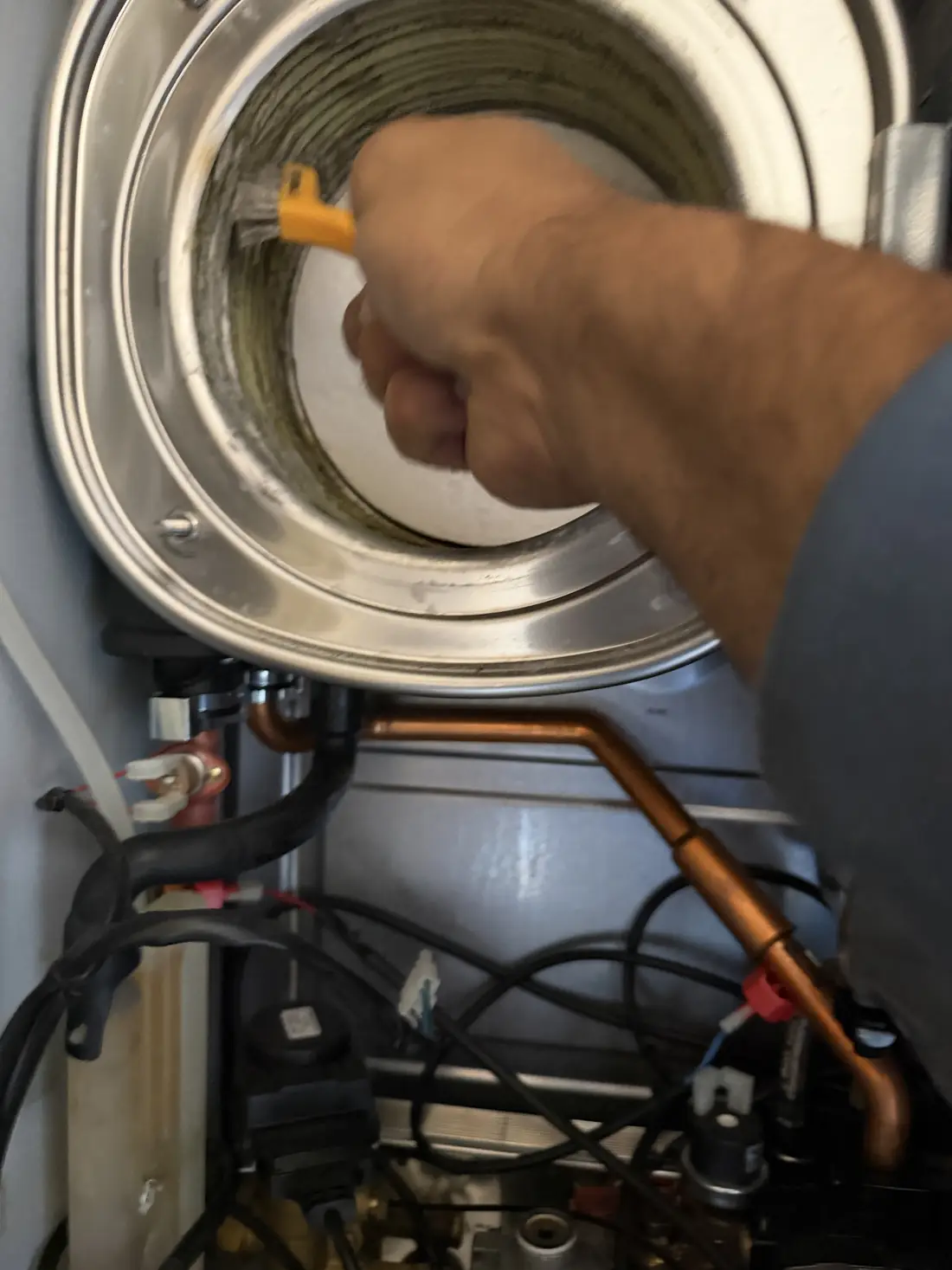
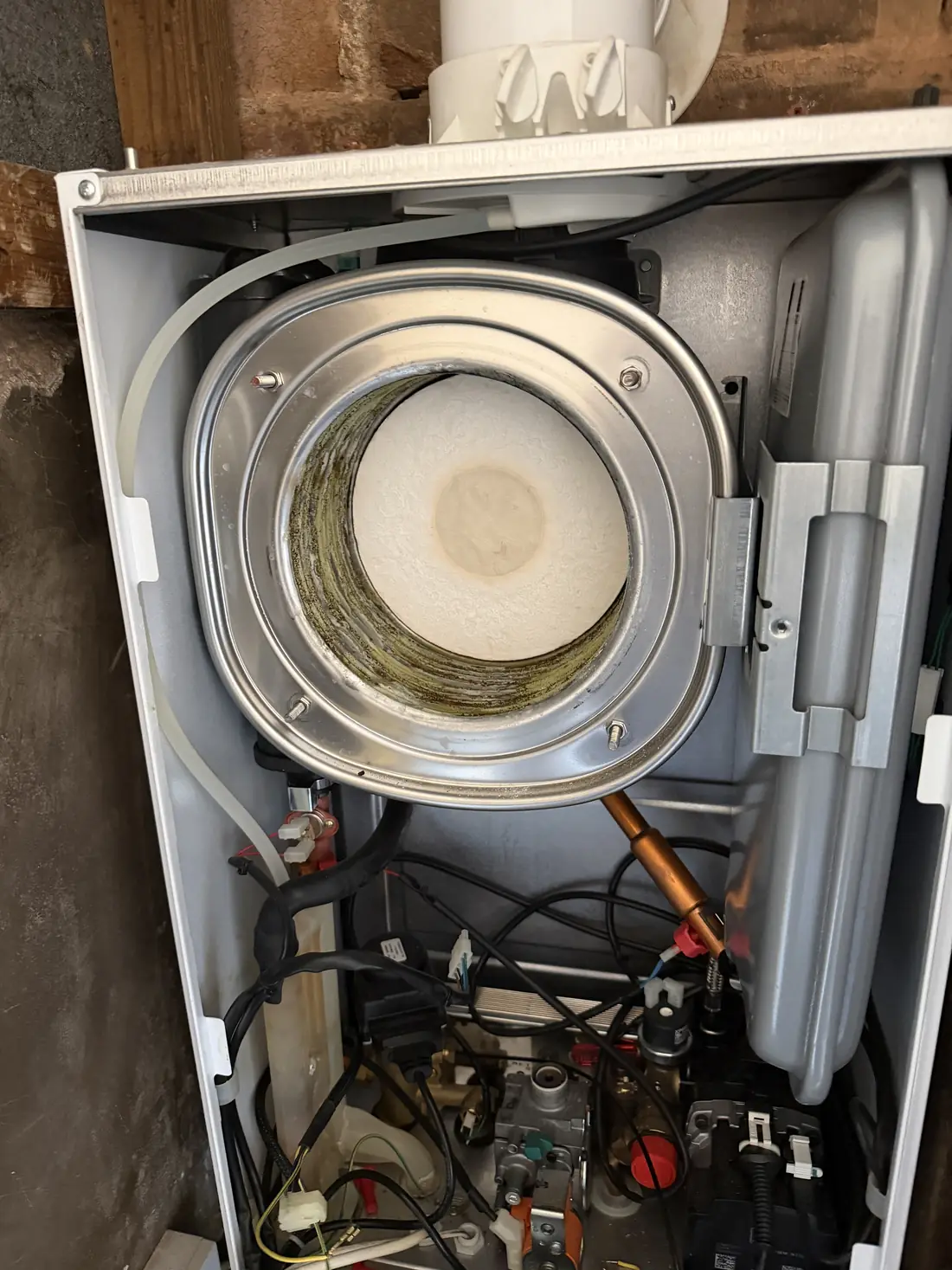
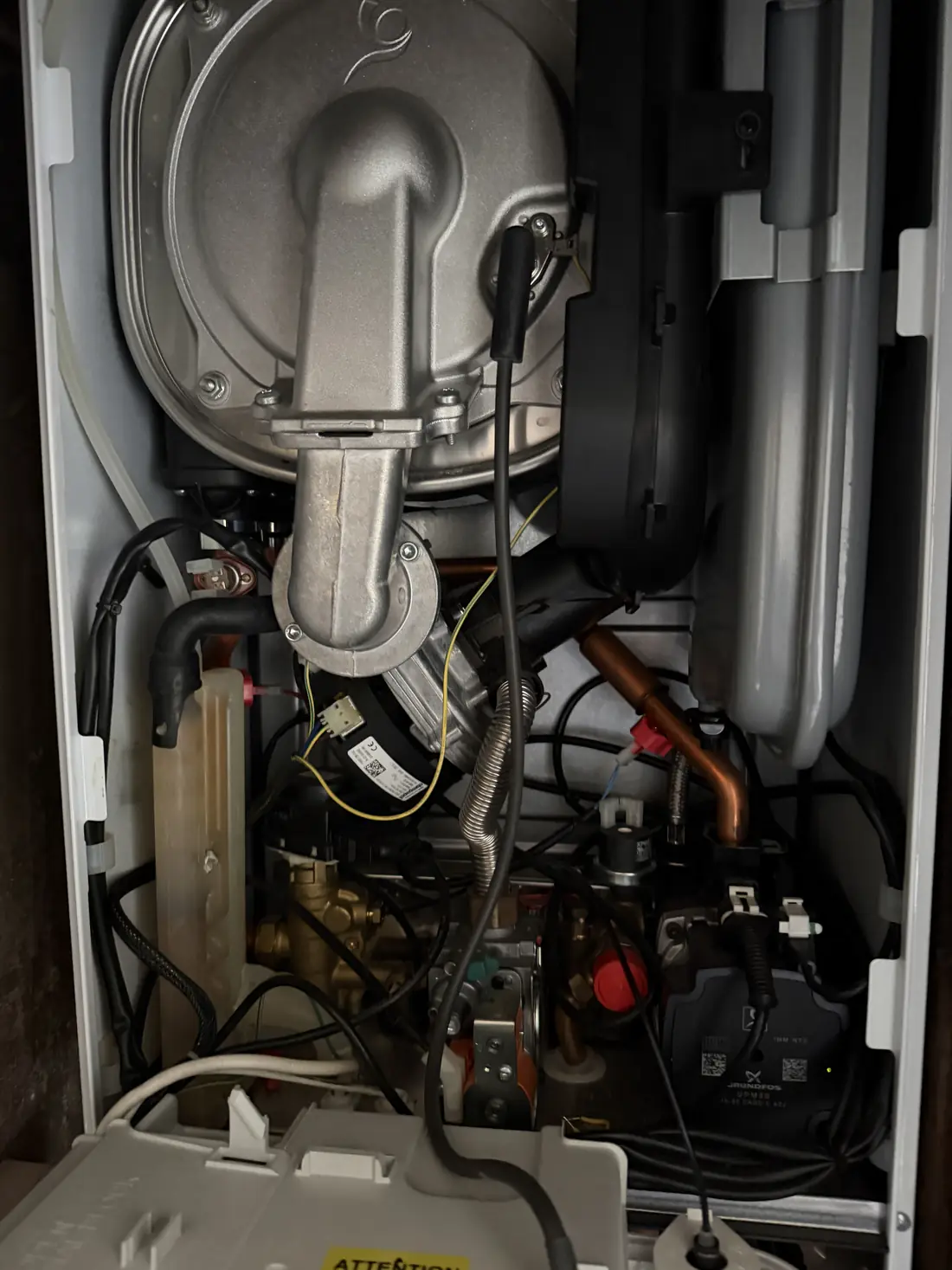
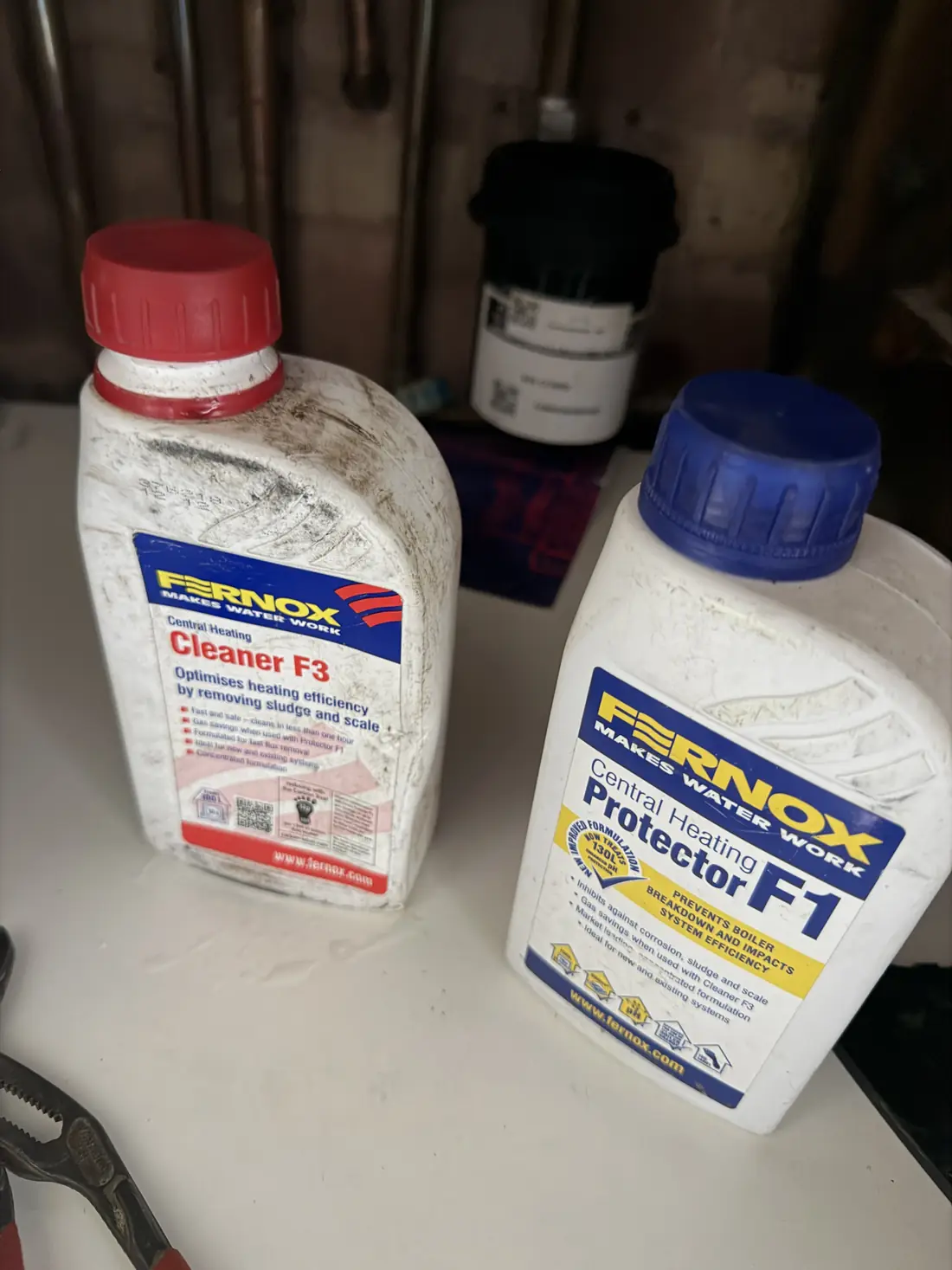
The strip-downBurner assembly off and the heat exchanger being brushed clean. The ring of deposit around the chamber is five years of normal use.The chamberThe combustion chamber with the burner door removed. A brushed heat exchanger burns cleaner and passes its combustion test with room to spare.RebuiltFan and burner assembly back on with new gaskets, ready for the combustion check and the system cleanse.The cleanseFernox F3 cleaner went in first and circulated for an hour. After draining and refilling, Fernox F1 protector went in to stop the corrosion starting again.
The service
This Baxi 800 has had a service every year since it went in. Most of those have been basic or intermediate services, which check combustion, safety devices, seals and the flue without taking the burner off. At five years we recommend the burner comes off, so this year was the full strip-down: fan and burner assembly removed, the heat exchanger brushed out, the burner cleaned, new gaskets and seals, and everything checked on the flue gas analyser afterwards.
The first photo shows the heat exchanger being brushed. The ring of deposit around the chamber is what five years of normal use looks like on a boiler that has been well looked after. It is not a fault, but it is the reason a full strip-down exists: left for another five years it becomes the fouled block that pushes combustion readings up and shortens the life of the boiler.
The system cleanse
The customer also asked us to clean the central heating system while we were there. Servicing the boiler keeps the boiler right. It does nothing for the water going round the radiators, and that water is what wears a boiler out. Over time it picks up rust from the inside of steel radiators and forms a black sludge, magnetite, which settles in radiators, pipework, the pump and the boiler's own heat exchanger.
We added Fernox F3 cleaner to the system and ran it with the heating on for an hour, which loosens the sludge and scale so it can be moved. Then we drained the system down, refilled it, and added Fernox F1 protector, a corrosion inhibitor that stops the rust from starting again. That is the order that matters: clean first, then protect. Inhibitor added to a dirty system just protects the sludge.
Why it matters
Industry estimates generally put central heating sludge behind 60% to 80% of annual boiler breakdowns in the UK. The burnt-out pump in our Walsall overheat lockout case study is a typical example: the pump did not fail on its own, the sludge choked it. Cold patches at the bottom of radiators, a boiler that kettles and bangs, and a magnetic filter that fills between services are all the same warning.
A chemical cleanse like this one is the light-touch option and suits a system that has been reasonably maintained. For a system that is badly sludged, with radiators cold at the bottom and a filter that fills within weeks, a power flush is the proper fix. We will tell you which you need rather than sell you the bigger job.
What it costs
A full strip-down service is £185, including the gaskets and seals and an inhibitor top-up. A basic service is £95 and an intermediate service £125. A system cleanse with cleaner, drain-down and fresh inhibitor is quoted alongside the service depending on the size of the system. Details of what each service level includes are on our boiler servicing page.
Common questions
How often does a boiler need a full strip-down service?
Every five to eight years for most boilers, with a basic or intermediate service in between. Every year for models whose heat exchangers foul quickly, Ideal and Vokera among them. This Baxi 800 had its first strip-down at year five, which is where we would put it for a well-maintained boiler.
What is the difference between a system cleanse and a power flush?
A cleanse adds a chemical cleaner to the system, runs it for an hour or so, then drains, refills and adds inhibitor. It suits a system in reasonable condition. A power flush connects a pump to the system and forces water through each radiator at high flow to shift heavy sludge. It is the right choice when radiators are cold at the bottom or a filter fills quickly, and it costs from £550 for up to ten radiators.
Why add inhibitor after cleaning?
The cleaner loosens and removes sludge and scale. The inhibitor stops fresh corrosion from starting inside the radiators and pipework, so the system stays clean. Inhibitor should be topped up at every service and replaced whenever the system is drained, which is why it is included in our strip-down service.
Does system sludge really cause boiler breakdowns?
Yes. Industry estimates generally put sludge behind 60% to 80% of annual boiler breakdowns in the UK. Sludge blocks the pump, jams diverter valves, restricts the heat exchanger and causes overheating and lockouts. Most of the pump and valve failures we replace have sludge behind them.
Job attended and photographed by our engineers, September 2026. Written up by Saeed Iqbal, the engineer who leads Synergy Gas & Plumbing (Gas Safe registered 594385). More on what each service level includes is on our boiler servicing page, and every job we write up is on the case studies index. Our Baxi boiler repair page covers the faults and codes we are asked about most on Baxi, Main and Potterton boilers.
What it costs
Updated Sept 2026
From £95
Basic service £95, intermediate £125, full strip-down £185.
No travel charge within 10 miles of B20 2JS. Further out, £2 per mile may apply — always agreed before anything is booked.
Heat exchanger stripped and cleaned on a Viessmann that is showing its age, then the Tempest cylinder serviced on the same visit. Customer given a straight view on when to start planning a replacement boiler.
A London landlord booked online for a tenant with no hot water from an Intatec Hiper HIU. The pressure independent control valve was sticking and the strainer behind it was seized and packed with dirt. Freed, stripped, cleaned and refitted; a new valve booked for a return visit.
The main heat exchanger had failed on a boiler that had done 17 years, so the numbers pointed one way. Like-for-like swap into the same cupboard, Worcester magnetic filter fitted, system dosed, guarantee registered.